
Managing a growing workforce using spreadsheets, paper attendance registers, and back-and-forth emails is a recipe for operational bottlenecks. As companies expand past 15 or 20 employees, manual tracking of leave balances, biometric reconciliation, monthly payroll calculations, and statutory labor compliances consumes hundreds of administrative hours and introduces costly human errors.
A Human Resource Management System (HRMS) resolves this friction. By unifying everyday HR tasks and employee data into a single, automated platform, an HRMS bridges the gap between workforce operations and strategic business management.
Here is an in-depth breakdown of what HRMS software is, how its interconnected workflows operate, its core modules, and why modern organizations depend on it.
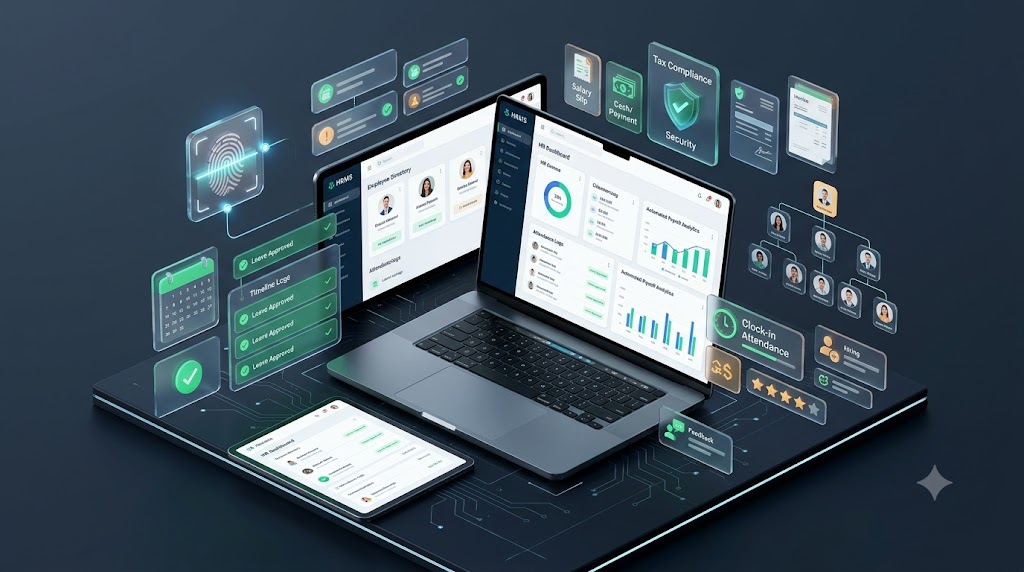
What is HRMS software, and how does it actually run a modern workforce? Explore this comprehensive guide covering core HRMS modules, working mechanics, payroll automation, and key business benefits.